Not Here, But There: Human-centric Process Redesign Patterns
Fifteen patterns for putting human resources first.
Goel, K., Fehrer, T., Röglinger, M., & Wynn, M. T. (2023). Not Here, But There: Human Resource Allocation Patterns. In Lecture Notes in Computer Science (pp. 377–394).
Research paper
Fifteen patterns for putting human resources first.
The paper introduces 15 human resource allocation patterns grouped into five categories—resource capability, utilisation, reorganisation, productivity, and collaboration. These patterns offer structured guidance for assigning people to tasks, taking into account performance considerations like time, cost, quality, and flexibility. The patterns are derived from a two-phase approach involving literature review and expert interviews.
Citation: Goel, K., Fehrer, T., Röglinger, M., & Wynn, M. T. (2023). Not Here, But There: Human Resource Allocation Patterns. In Lecture Notes in Computer Science (pp. 377–394). Read: https://link.springer.com/chapter/10.1007/978-3-031-41620-0_22
My PhD note: P7 – Human Resource Allocation Patterns
Abstract
The digital age entails challenges that pose pressure on organisations to redesign their business processes for improved performance. A significant aspect of this effort is the appropriate assignment of human resources - or people - to tasks. Despite the importance, there is a lack of structured guidance on how best to allocate people to tasks taking into account various performance considerations such as time, cost, quality and flexibility. This paper presents 15 human-centric pro cess redesign patterns organised into five categories: resource capability, utilisation, reorganisation, productivity and collaboration. The pattern collection aims to provide methodological support in business process improvement. The research was conducted in a two-phase approach. In the first phase, a narrative literature review was conducted to identify existing resource patterns and practices, which were synthesised into an initial catalogue of human-centric process redesign patterns. In the second phase, this catalogue was evaluated through expert interviews with ten practitioners. The patterns provide a repository of knowledge guiding academics and practitioners on different ways a person can be assigned to a task for improved process efficiency. These patterns form a strong foundation for future research in the area of human-centred business process redesign.
Content
The paper introduces 15 human resource allocation patterns grouped into five categories—resource capability, utilisation, reorganisation, productivity, and collaboration. These patterns offer structured guidance for assigning people to tasks, taking into account performance considerations like time, cost, quality, and flexibility. The patterns are derived from a two-phase approach involving literature review and expert interviews.
1) Development Phase
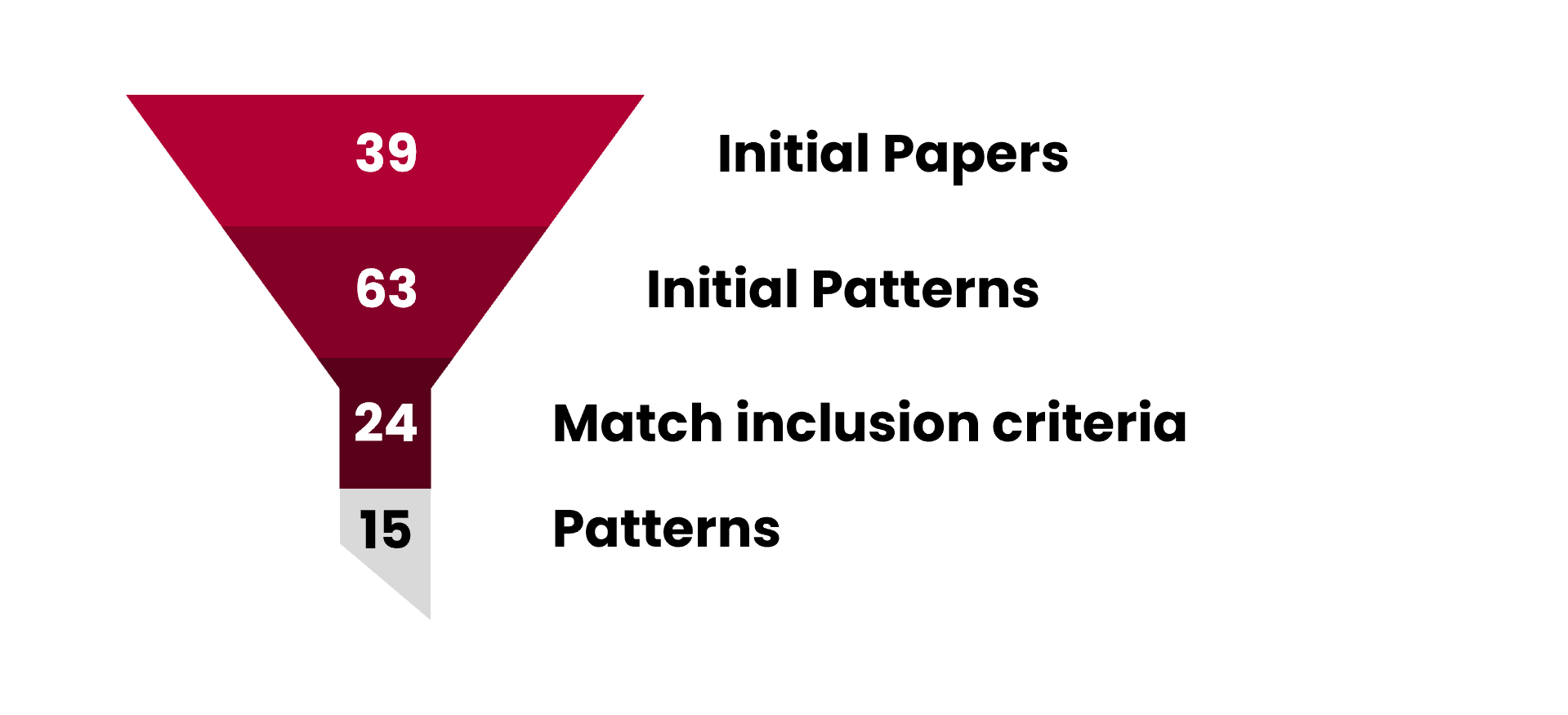
Literature review to identify pattern sources in 15 years of BPM conference proceedings, and the databases ABI INFORM, EBSCOhost, ScienceDirect, JSTOR, and Google Scholar. Out of 848 search results, we identified 39 relevant papers
63 patterns were filtered via inclusion criteria:
- Relation to human resources
- Pattern impact can be evaluated during BPR
- Pattern implementation should focus a process, not the whole organization
24 patterns were merged and documented as a set of 15 HRAPs for refinement
2) Refinement Phase
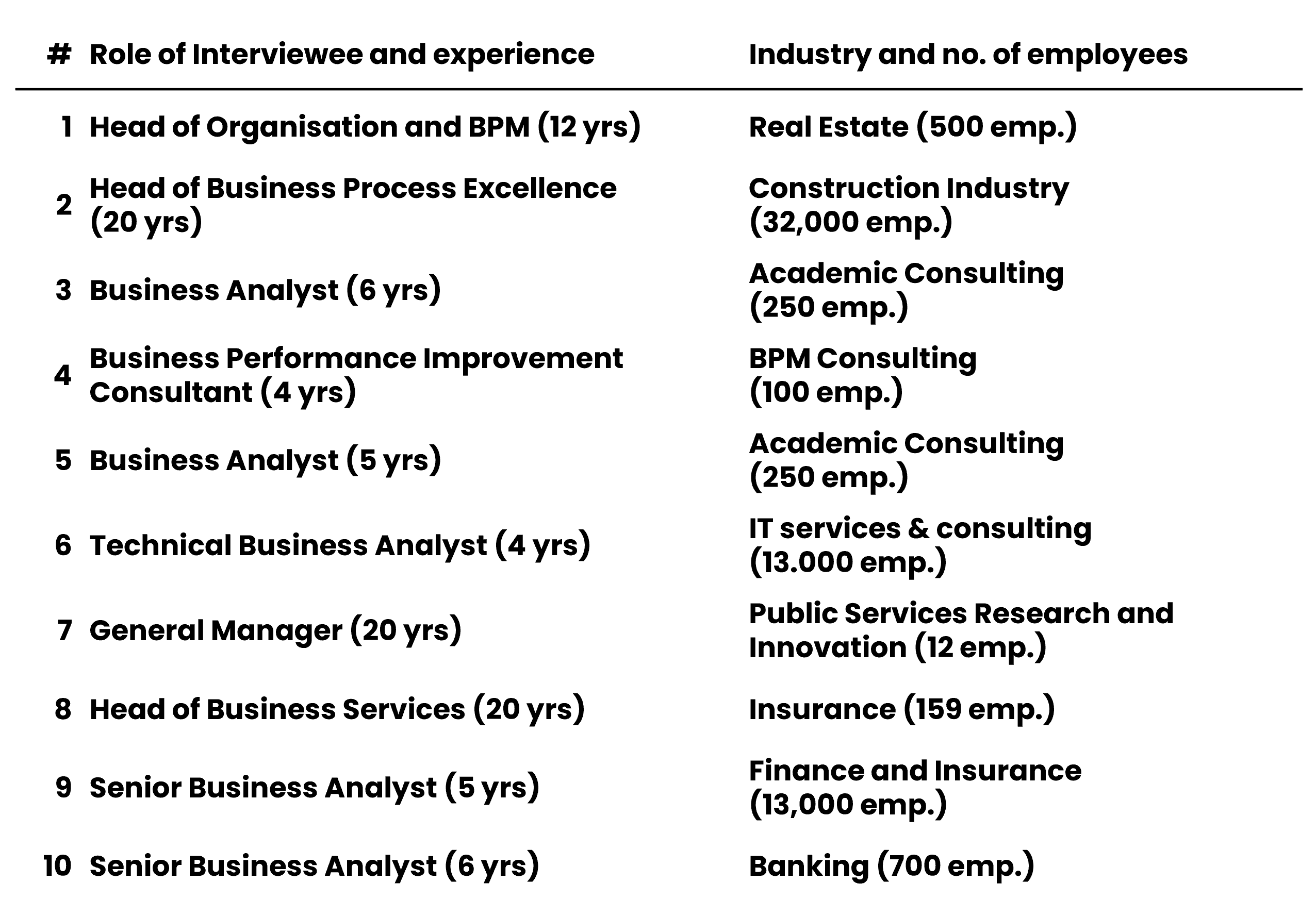
- Semi-structured interviews with 10 process improvement experts recruited within our network
- The 15 patterns were discussed and evaluated for usefulness and pervasiveness
- Patterns were refined in accordance with the feedback
The patterns are categorized into five groups
- Capability: Allocating human resources based on task proficiency.
- Utilization: Assigning human resources for optimal effectiveness.
- Re-organization: Allocating human resources to tasks or processes guided by organizational strategies.
- Productivity: Distributing human resources based on historical efficiency data.
- Collaboration: Allocating human resources considering their interactions within the organization.
Human-Centric Process design
Process design with people in mind.
Patterns from this research
- Expertise-based task assignment — Match tasks to experts’ specialized skills for efficiency
- Role-based task assignment — Assign tasks based on resources’ roles in the organisation
- Preference-based task assignment — Let people do what they love to do
- Workload-based task assignment — Allocate tasks based on individuals’ incomplete workload
- Constraint-based task assignment — Allocate tasks considering business process execution constraints
- Empower resources — Empower workers for more decision-making authority
- Deploy extra resources — If capacity is insufficient, consider increasing the available number of resources
- Task delegation — Reassign tasks along the organisational hierarchy
- Appoint case managers — Assign a responsible individual for handling each case type
- Performance-based task assignment — Allocate tasks based on past performance: execution time and success
- Experience-based task assignment — Delegate task according to experience: execution frequency, case involvement, interactions
- Quality-based task assignment — Allocate task based on past feedback or quality metrics
- Cost-based task assignment — Delegate tasks according to resource cost
- Teamwork-based assignment — Allocate task based on collaborative experience: handover time, interactions, diversity
- Department-based assignment — Distribute tasks by interdepartmental interactions to enable or restrict involvement
Patterns related to this item
Expertise-based task assignment
Match tasks to experts' specialized skills for efficiency
Assign tasks based on resources' roles in the organisation
Preference-based task assignment
Let people do what they love to do
Workload-based task assignment
Allocate tasks based on individuals' incomplete workload
Constraint-based task assignment
Allocate tasks considering business process execution constraints
Empower workers for more decision-making authority
If capacity is insufficient, consider increasing the available number of resources
Reassign tasks along the organisational hierarchy
Assign a responsible individual for handling each case type
Performance-based task assignment
Allocate tasks based on past performance: execution time and success
Experience-based task assignment
Delegate task according to experience: execution frequency, case involvement, interactions
Allocate task based on past feedback or quality metrics
Delegate tasks according to resource cost
Allocate task based on collaborative experience: handover time, interactions, diversity
Distribute tasks by interdepartmental interactions to enable or restrict involvement